

Introduction
As temperatures drop and flowers fade, honeybees face one of the most challenging periods of the year — winter. Unlike many insects that hibernate, bees remain active within their hives, clustering together to maintain warmth and protect their precious queen. For beekeepers, proper winter hive care is critical to ensure colony survival and health when spring returns. Successful winter hive care is the difference between a thriving spring colony and a tragic winter loss.
In this comprehensive guide, you’ll learn how to prepare your bees for cold weather, what to do before and during winter, common mistakes to avoid, and expert tips for successful overwintering.
2. Preparing the Hive for Cold Weather
Preparation starts in late summer to early autumn. Strong, healthy colonies are the best defense against cold.
🧰 Essential Checklist for Winter Hive Care and Preparation
- ✅ Ensure a young, productive queen (replace if older than 2 years).
- ✅ Combine weak colonies to form strong ones.
- ✅ Check honey stores — at least 60–90 pounds (27–40 kg) per hive.
- ✅ Treat for Varroa mites and nosema before winter.
- ✅ Remove empty supers to reduce unnecessary space.
- ✅ Tilt the hive slightly forward for moisture drainage.
Pro Tip: Late autumn is the time to reduce entrances to prevent mice and wasps from invading.
3. Insulation and Ventilation
Proper insulation is vital — but so is ventilation. Too much insulation can trap moisture, which kills bees faster than cold. The secret to professional winter hive care isn’t just warmth, but managing the delicate balance of airflow.
Why Moisture is the Biggest Threat to Winter Hive Care:
- Add foam board or straw insulation wraps around the hive.
- Avoid blocking ventilation holes or top entrances.
- Place a moisture quilt box (or absorbent material like wood shavings) on top to reduce condensation.
- Use an inner cover with a top vent to release humid air.

Adjustable Insulated Winter Beehive Wrap (600D Oxford)
Protect your colony from freezing temperatures with this heavy-duty insulated cover. Designed to fit both 8 and 10-frame hives, it’s the ultimate barrier against wind and moisture.
- ✅ 600D Oxford Fabric: Waterproof, windproof & ultra-durable.
- ✅ Universal Fit: Adjustable 75.98″ x 23.6″ size.
- ✅ Eco-Friendly: Reusable and built for multiple seasons.
- ✅ Lightweight: Easy to install without disturbing the bees.
*As an Amazon Associate, Buzz & Hive earns from qualifying purchases.
Bees can handle cold, but not wet and cold conditions. Moisture dripping from the top can chill the cluster.
The Biological Foundation of Winter Survival
Winter survival isn’t just about the box; it’s about the bees inside. “Winter bees” (diutinus bees) are biologically different from summer bees, possessing higher levels of vitellogenin (protein) to live up to 6 months.
To ensure these bees are healthy, you must address two critical factors early in autumn:
- Queen Health: A strong winter cluster requires a prolific queen. If your queen is failing in August, you must implement Advanced Requeening Strategies to ensure a massive burst of brood before the first frost.
- Mite Control: Varroa mites are the #1 cause of winter crashes. A hive weakened by viruses cannot generate the heat necessary to survive. Ensure you have followed a Complete Guide to Varroa Mite Control before the temperature drops below 10°C (50°F).

The Physics of the Winter Cluster
When temperatures fall below 57°F (14°C), bees stop flying and form a cluster. The queen stays in the center, where the bees maintain a constant temperature of 90-95°F (32-35°C), regardless of the blizzard outside. They do this by unhooking their wings and vibrating their thoracic muscles. This process requires an enormous amount of energy, which brings us to…
4. Feeding Strategies: A Crucial Part of Winter Hive Care
Food supply is the biggest survival factor. Bees rely on stored honey, but sometimes it’s not enough — especially after a poor nectar season.
Winter Feeding Options:
- Honey Frames: Best natural option.
- Fondant or Sugar Bricks: Place directly above the cluster.
- Candy Boards: Provide both food and moisture absorption.
- Pollen Patties: For early spring stimulation (avoid mid-winter use).
Emergency Feeding: The Mountain Camp Method
If you check your hive in January and find the bees at the very top of the frames, they are out of honey.
- The Mountain Camp Method: Pour dry granulated sugar onto a sheet of newspaper placed directly over the frames. The moisture from the bees’ breath turns the sugar into a hard crust they can eat.
- Warning: Never use liquid syrup in winter. It increases humidity and can cause dysentery if the bees can’t take cleansing flights.
Never feed liquid syrup in freezing temperatures — it can chill bees.
Tip: Always keep emergency feed ready. Starvation is the #1 cause of winter losses.
5. Monitoring and Maintenance
Even during winter, beekeepers should check hives periodically — without opening them fully.
Winter Monitoring Guide:
- Tap the hive gently and listen — a soft buzz means all is well.
- Check for signs of moisture or mold around the entrance.
- Observe dead bees outside — normal unless excessive.
- On warmer days (above 10°C / 50°F), watch for cleansing flights.

Stay Safe & Sting-Free
Don’t let aggressive robbing bees ruin your day. Invest in a Professional Ventilated Bee Suit for maximum protection and comfort.
View Top Rated Suits →6. Common Winter Beekeeping Mistakes
Even experienced beekeepers make errors that can cost entire colonies.
❌ Top Mistakes to Avoid
- Over-insulating without ventilation (causes condensation).
- Neglecting mite treatments in autumn.
- Leaving too many supers on (makes heating harder).
- Not checking honey stores before frost.
- Opening hives too often in freezing temperatures.
7. Tips for Beekeepers in Harsh Climates
For those in regions with long, snowy winters, preparation goes beyond basics.
Extra Measures:
- Build windbreaks using straw bales or fences.
- Wrap hives in black tar paper to absorb sunlight.
- Elevate hives off the ground to prevent snow blockage.
- Group hives together for mutual warmth.
Tip: Avoid placing hives in shaded areas — sunlight encourages activity and reduces moisture buildup.
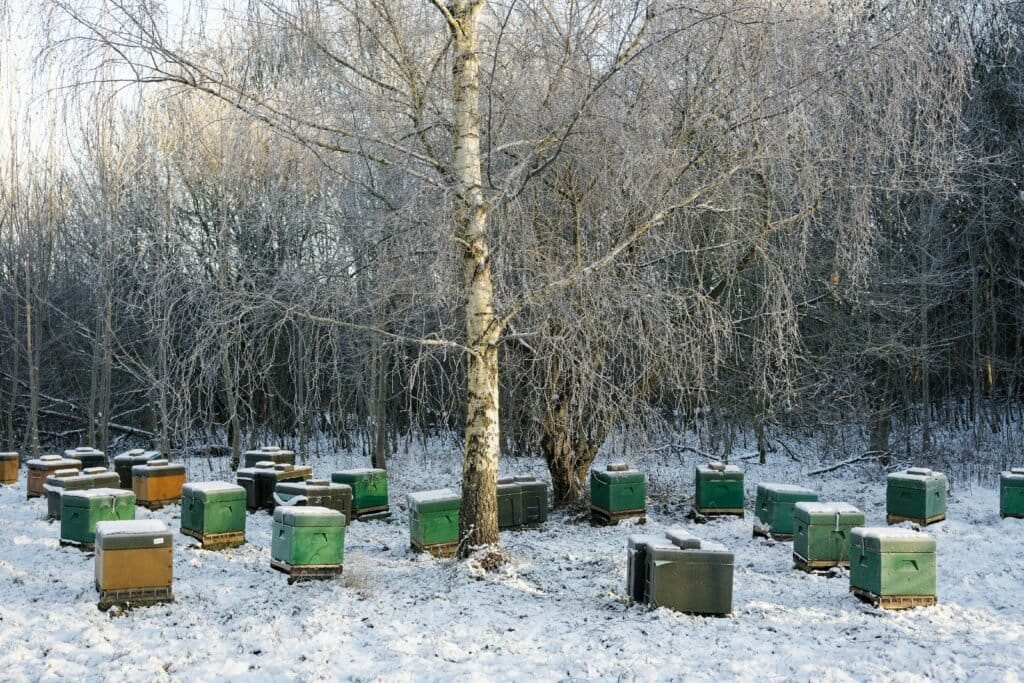
8. Post-Winter Hive Inspection
When spring nears and temperatures consistently stay above 10°C (50°F), it’s time for the first inspection.
Spring Checkup Steps:
- Open the hive briefly during midday.
- Look for signs of a healthy queen — eggs or larvae.
- Remove moisture quilts and wraps gradually.
- Replace moldy or damaged frames.
- Provide light sugar syrup to stimulate early brood rearing.
If a colony didn’t survive — examine the cause. Common reasons: starvation, disease, moisture, or queen failure.
9. FAQ
Q: Should I leave honey supers on in winter?
No. Remove excess supers; bees can’t heat large empty spaces efficiently.
Q: Can bees survive -20°C temperatures?
Yes — if the hive is dry, insulated, and has enough honey.
Q: Should I wrap my hive completely?
Partial wrapping is best; leave ventilation space at the top and bottom.
Q: How much honey do bees need for winter?
Around 60–90 pounds depending on climate severity.
⚡ Quick Check: Is Your Hive Ready?
If you answer “NO” to any of these, your colony needs immediate attention:
- ✅ Have you treated for Varroa Mites?
- ✅ Is the hive tilted slightly forward?
- ✅ Do you have at least 60 lbs of honey?
- ✅ Is there a top entrance for moisture?
10. Conclusion
Winter hive care is not just about keeping bees alive — it’s about ensuring a thriving start in spring.
By understanding bee behavior, managing food, balancing insulation and ventilation, and avoiding common mistakes, you give your colonies the best chance to survive the harshest months.
Beekeeping is a partnership with nature. When you respect the bees’ instincts and support their natural resilience, they’ll reward you with strong, productive hives year after year.
🐝 A Century of Beekeeping Wisdom
"Beekeeping is more than a hobby for me—it’s a family legacy. From my great-grandfather to my brother and me, we’ve managed our apiaries in the rugged landscapes of Herzegovina for four generations. Today, we care for over 300 hives, blending century-old traditions with modern techniques. Every tip I share comes directly from our hives to your screen."

