

Swarm Prevention Techniques: The Complete Guide to Stopping Your Colony From Leaving and Maximizing Honey Yield
The greatest dread of any beekeeper is arriving at the apiary in late spring to find an empty hive—a testament to a successful swarm and a loss of 50-70% of the colony’s productivity. Swarming is the honeybee colony’s natural reproductive strategy, but for the beekeeper, it represents a significant financial and structural setback. Mastering Swarm Prevention Techniques is not just about keeping your bees; it’s about safeguarding your honey harvest and maintaining strong, resilient colonies. By implementing advanced Swarm Prevention Techniques, you can effectively double your honey yield by keeping your workforce focused on foraging rather than reproducing.
This comprehensive 4000-word guide serves as your essential manual for navigating the swarm season. We will move beyond simple inspections, providing a deep dive into the biological triggers, critical detection signs, and advanced, proven methods (like the Demaree and Checkerboarding) to effectively disrupt the swarm impulse.
Understanding the Swarm Urge: Why Bees Leave
The decision to swarm is a planned, deliberate action by the colony to reproduce and ensure species survival. It is initiated when the hive recognizes it has maximized its resources within the current space. The swarm impulse is triggered by a combination of key factors:
Biological Triggers for Swarm Prevention Techniques
- Brood Nest Congestion (The Most Common Trigger): When the brood chamber becomes overly crowded with emerging bees, and the queen runs out of space to lay eggs, the colony perceives itself as “full.” This lack of laying space is the primary precursor to swarm preparation.
- Lack of Ventilation: High temperatures and poor airflow exacerbate the congestion problem, making the hive environment uncomfortable and stimulating the impulse to seek a new, cooler home.
- Old Queen: Queens older than two years produce less pheromone (specifically, Queen Mandibular Pheromone, or QMP). QMP signals the queen’s presence and fertility. Low QMP levels signal to the workers that it is time to raise a new queen and swarm with the old one.
- Strong Nectar Flow: A sudden abundance of nectar can lead to the “backfilling” of empty brood cells with honey, rapidly shrinking the queen’s laying area and triggering congestion.
The Critical Signs: Early Detection of Swarming
Effective Swarm Prevention Techniques require you to read the subtle clues your bees are giving you, often days or even weeks before the actual event. Ignoring these signs means you are already too late.
5 Non-Negotiable Warning Signs
- Queen Cells (The Smoking Gun): The presence of several charged (containing an egg or larva) swarm cells—often resembling peanut shells—built along the bottom edges of the brood frames is the clearest indication that the colony is preparing to leave.
- Reduced Foraging Activity: As the swarm date approaches, the bees that are preparing to leave often reduce their foraging, conserving energy for the long journey.
- Backfilling the Brood Nest: Instead of empty cells available for the queen, you will find cells containing fresh nectar or capped honey, especially around the edges of the brood pattern. This is a direct sign of congestion.
- Bearding: Large clusters of bees hanging outside the hive entrance, especially on cooler days, often indicates severe overheating and lack of space inside the hive.
- Reduced Queen Pheromone (The Indirect Sign): An experienced beekeeper might notice a general “calmness” or slower movement of the bees, indicating a drop in the queen’s pheromone distribution.
The Time-Honored Method: Creating Splits (Artificial Swarming)
The single most effective swarm prevention technique is preemptive, controlled artificial swarming, or splitting the colony. The goal is to relieve congestion and satisfy the colony’s urge to reproduce before they do it themselves, allowing you to maintain control over both resulting colonies.
The Role of Splits as Primary Swarm Prevention Techniques
Splitting should be done just as the colony shows signs of congestion, often two to three weeks before the peak swarm season begins in your region.
- Relieving Pressure: By removing 5–6 frames of brood, bees, and resources, you instantly alleviate the physical crowding in the mother hive.
- Stopping Queen Cell Production: The mother colony, sensing the sudden drop in population and resources, will often destroy any existing swarm cells and abandon the swarm preparations.
- Building New Queens: The split (the new colony) will immediately begin raising a new queen, focusing their energy on reproduction in the new location, not swarming.
Pro Tip for Success: Many commercial beekeepers combine two or more Swarm Prevention Techniques simultaneously to ensure maximum hive stability during a heavy nectar flow.
The Key Split Method: The Walk-Away Split
The simplest method for beginners involves creating a “walk-away” nuc (nucleus colony):
- Find the queen and ensure she remains in the original hive.
- Move 2 frames of sealed brood, 1 frame of eggs/larvae, 1 frame of pollen, and 1 frame of honey into a new nucleus box.
- Shake several extra frames of nurse bees into the nuc box (to ensure enough workers to care for the brood).
- Plug the entrance and move the nuc to a new location at least two miles away, or leave it in the yard with the entrance open.
- The nuc will raise its own queen from the eggs/larvae you provided, thus splitting the reproductive urge of the mother colony.
Advanced Swarm Prevention Techniques for High-Yield Hives
For high-performing hives where simple splitting is not enough, or for beekeepers who cannot afford to lose the main nectar flow (which splitting temporarily reduces), advanced Swarm Prevention Techniques are necessary.
The Demaree Method (Brood Separation)
The Demaree Method is a powerful, intensive technique designed to prevent swarming while retaining a large workforce for honey production. It works by convincing the nurse bees in the upper box that the queen is lost, thus diverting their energy from swarming to raising a new queen cell, while the main population remains intact to forage.
The Step-by-Step Process:
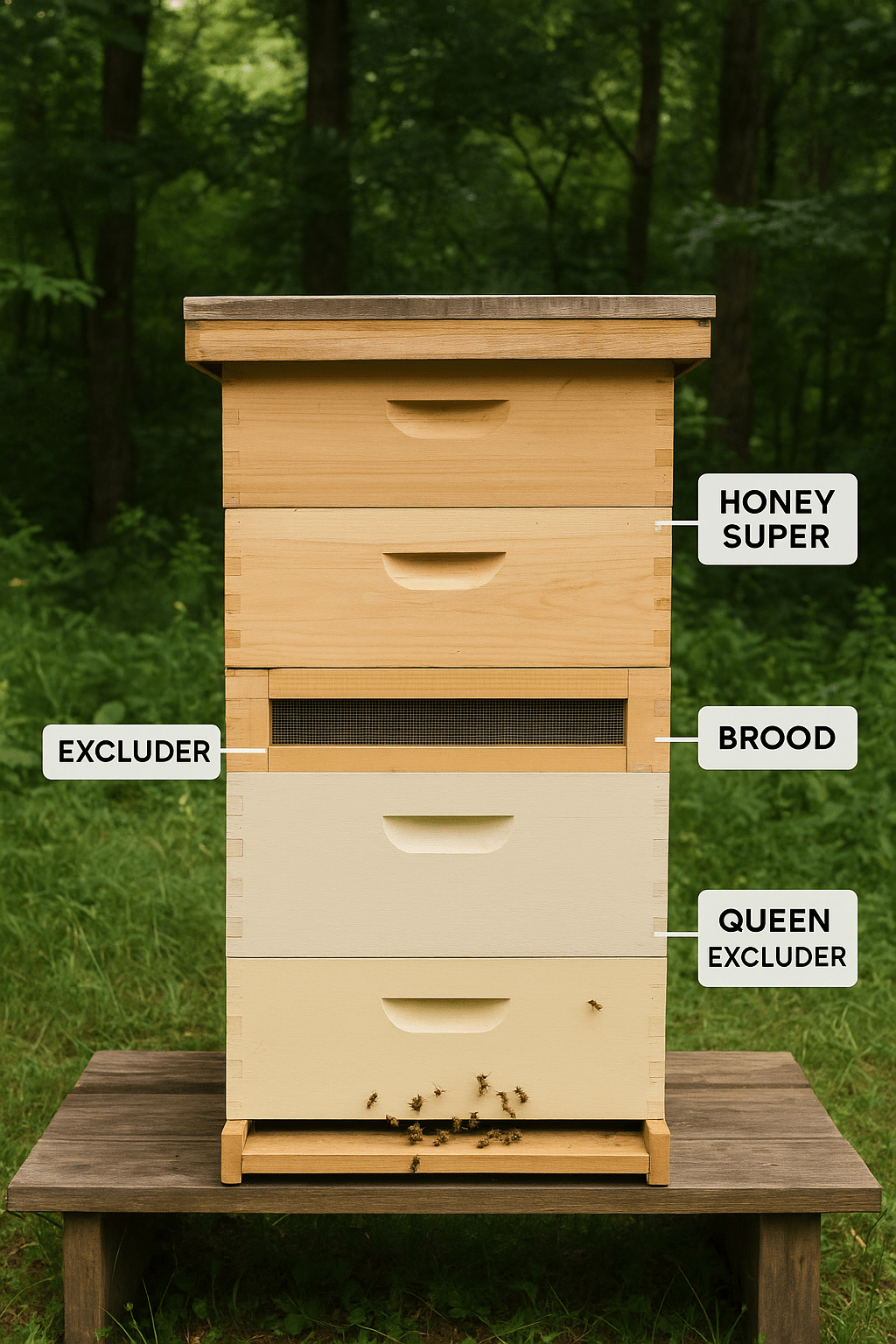
- Locate the queen and place her on a single frame of comb in the lowest brood box. Fill the remaining space with foundation or empty drawn comb.
- Place a Queen Excluder on top of this bottom box.
- Place one or two empty honey supers on top of the excluder.
- Place the original brood box (containing the majority of the sealed and open brood, but NOT the queen) on top of the stack.
- In the top box, destroy all existing swarm cells. The nurse bees will migrate up to care for the brood and quickly build emergency cells.
This separation effectively tricks the hive, satisfying the swarm urge by prompting the building of new queen cells (which are destroyed weekly) while allowing the massive field force to continue bringing in honey through the central supers.

Premium Plastic Queen Excluder
Checkerboarding (The Overwintering Strategy)
Checkerboarding is a less invasive technique used primarily in late winter or early spring to prevent congestion before it starts. It involves inserting alternating frames of empty drawn comb or foundation (empty) and frames of capped honey (full) into the perimeter of the existing brood nest. When applied correctly, checkerboarding is one of the most effective swarm prevention techniques because it manipulates the colony’s perception of available space.
- The Theory: By placing empty frames next to full ones, the bees believe there is still plenty of unused space above the main cluster for expansion. This psychological trick discourages the bees from feeling congested and initiating swarm cell production.
- Best Practice: This method is most effective when the weather is still cool and the hive is just beginning its rapid spring build-up.

The Snelgrove Board Method
This technique uses a specialized board that allows you to manage hive entrances and control air circulation. It works by separating the hive into two distinct colonies—upper and lower—while allowing the foragers from both sections to exit through the main lower entrance. This builds a powerful foraging force in the original location while the separate queen in the top box distracts the swarm urge.
Essential Equipment for Better Swarm Prevention Techniques
Effective Swarm Prevention Techniques are supported by proactive equipment management.
Providing Ample Space and Ventilation
- Timely Supering: Add honey supers before they need them—ideally when the previous super is about 70% full. Providing extra space vertically draws the bees away from the brood nest.
- Deep Brood Boxes: Running two deep brood boxes (or the equivalent in medium boxes) is crucial for giving the queen maximum laying area.
- Screened Bottom Boards: These significantly improve ventilation, helping to regulate hive temperature and reducing the urge to swarm caused by heat.
- Top Ventilation: Placing a shim or small block under the outer cover during peak summer heat can improve air exchange and relieve congestion.
Improving airflow isn’t just about cooling; it’s one of the most underrated Swarm Prevention Techniques for crowded summer hives. Many beekeepers overlook ventilation, yet it remains one of the simplest swarm prevention techniques to implement during a hot summer.
The Importance of a Young Queen
Re-queening your colonies every one to two years is one of the simplest and most effective Swarm Prevention Techniques. A young queen:
- Lays more consistently, ensuring the brood area is utilized efficiently.
- Produces higher levels of QMP, which effectively suppresses the swarm impulse in the workers.
How to Catch a Swarm: From Prevention to Action
Even if your Swarm Prevention Techniques fail, being prepared to catch a swarm can save your genetics and your investment. Even with the best management, bees sometimes follow their primal instincts and swarm. If you spot a cluster hanging on a nearby branch, don’t panic—this is actually the best opportunity to expand your apiary for free.
1. Prepare Your Gear
Before approaching, ensure you have your protective suit on. You will need:
- A Nuc Box or an Empty Deep Hive: To house the new colony.
- A Soft Brush: To gently guide the bees.
- Swarm Commander Lure: To make the new home irresistible.

2. The Shake Technique
If the swarm is on a low-hanging branch, place your box directly underneath. Give the branch one firm, sharp shake. The bulk of the cluster will drop into the box.

3. Confirm the Queen is Inside
Watch the behavior of the bees left outside. If they start heading into the box while “fanning” (lifting their abdomens and vibrating wings), it means the Queen is inside, and the rest will follow her scent.
4. Move at Dusk
Leave the box in place until sunset to ensure all scout bees have returned. Once the sun is down, close the entrance and move them to their permanent spot in your apiary.

The Annual Calendar for Swarm Prevention Techniques
This schedule should be your year-round plan, moving beyond reactive management.
Swarm Prevention Method Matrix: Speed vs. Complexity
| Method | Primary Goal | Complexity | Impact on Honey Yield | Best Time to Apply |
|---|---|---|---|---|
| Simple Split | Relieve congestion by dividing the colony. | Low | Low (Increases total colonies but split hives produce less individually) | 2 weeks before swarm season begins. |
| Demaree Method | Separate queen from the brood to trick the hive. | High | High (Keeps the foraging force intact for a massive harvest) | Early swarm season when colony is strong. |
| Checkerboarding | Create empty space above the brood nest to prevent congestion. | Medium | Low (Mainly a management technique) | Late winter or very early spring build-up. |
| Re-queening | Eliminate old genetics and introduce a younger, more pheromone-rich queen. | Low | Low (But ensures future colony stability) | Late summer or early fall preparations. |
Year-Round Swarm Management Calendar
Frequently Asked Questions (FAQ) About Swarm Prevention
The critical season is typically late spring (mid-April to early June) when nectar flow is strong and the colony population is rapidly expanding.
Checkerboarding (moving empty frames/combs into the brood nest area) is most effective when applied early, during the spring build-up, and is highly effective on strong Langstroth hives.
Yes. Re-queening with a new, young queen significantly reduces the swarm impulse, as young queens produce a higher level of pheromone, which suppresses the urge to swarm.
If the swarm has already left, you will typically find a few newly emerged queen cells that have been torn open from the side (indicating a virgin queen has emerged) or you may hear a ‘piping’ sound from queens still preparing to emerge.
Conclusion: Swarm Prevention is Hive Management Mastery
Swarming is a natural, beautiful, but costly phenomenon. While no beekeeper can guarantee 100% prevention, mastering these Swarm Prevention Techniques moves your practice from beginner to expert level. The most successful strategy is not reliant on a single trick but on consistent, proactive management—specifically, recognizing early signs of congestion, ensuring the queen has ample laying space, and providing the necessary vertical space through timely supering. By mitigating the swarm impulse, you ensure your colonies stay intact, remain strong for the main nectar flow, and ultimately reward you with a generous honey harvest. Mastering these Swarm Prevention Techniques transforms beekeeping from a game of luck into a professional management practice. Ultimately, your success in the apiary depends on your ability to consistently apply these swarm prevention techniques throughout the spring build-up
🐝 A Century of Beekeeping Wisdom
"Beekeeping is more than a hobby for me—it’s a family legacy. From my great-grandfather to my brother and me, we’ve managed our apiaries in the rugged landscapes of Herzegovina for four generations. Today, we care for over 300 hives, blending century-old traditions with modern techniques. Every tip I share comes directly from our hives to your screen."

