

The very first and most crucial decision a new beekeeper faces is choosing the right bee home, which often boils down to the classic debate: Langstroth vs Top Bar Hive? This choice dictates everything from your initial investment and maintenance frequency to your honey harvesting method and overall beekeeping philosophy. It is a decision that, once made, is difficult and expensive to reverse.
This guide serves as the definitive deep-dive into the three most popular beehive designs globally: the standardized Langstroth, the foundationless Top Bar, and the vertical Warre. We will move past simple preference, providing a rigorous, technical comparison of costs, labor, winterization requirements, and the philosophical approach each hive demands. By the end of this comprehensive analysis, you will be equipped to choose the perfect home for your first—or tenth—colony.
The Foundation: Understanding the Langstroth Hive (The Industry Standard)
The Langstroth hive, designed by L.L. Langstroth in 1851, is the undisputed industry standard, accounting for an estimated 90% of hives worldwide. Its dominance stems from a single, revolutionary concept: the bee space.
Key Features and Standardization
- The Bee Space: The 3/8-inch (9.5 mm) gap that bees respect, allowing frames to be removed easily without being glued with propolis or covered in comb. This feature made commercial migratory beekeeping possible.
- Vertical Expansion: The ability to add modular boxes (supers) vertically, allowing beekeepers to easily separate the brood nest from the honey harvest area.
- Standardization: All Langstroth components (deep, medium, and shallow boxes, frames) are interchangeable, regardless of the manufacturer, simplifying sourcing and replacements.
Langstroth Pros and Cons
| Pros | Cons |
| Highest Honey Yield: Vertical space encourages bees to store more honey. | Heavy Lifting: Full honey supers (deep boxes) can weigh 60–90 lbs. |
| Easy Extraction: Frames fit commercial extractors, leaving comb intact. | Higher Start-up Cost: Requires multiple boxes, foundations, and an extractor. |
| Pest/Mite Management: Easy to inspect all frames and apply treatments. | More Intrusive Inspections: Constant manipulation of frames can stress the colony. |
The Alternative: Exploring the Top Bar Hive (The Horizontal Home)
The Top Bar Hive (TBH) has gained massive popularity among hobbyists who favor a hands-off, more “natural” approach to beekeeping. The design is simple: a long, horizontal box covered by wooden bars, allowing bees to build their comb naturally without plastic or wax foundation sheets.
Key Features and Natural Beekeeping Philosophy
- Foundationless Comb: Bees build comb freely from the top bars. This results in comb that is often cited as being healthier for the colony.
- Horizontal Expansion: The hive is expanded by adding bars horizontally, eliminating the need for heavy lifting.
- Harvesting Method: Honey is harvested by the crush and strain method, meaning the comb is destroyed in the process.
Top Bar Pros and Cons
| Pros | Cons |
| Low Start-up Cost: Simple wood construction; no foundation or extractor needed. | Low Honey Yield: Designed for bee health, not maximum production. |
| Less Heavy Lifting: Only bars are lifted, eliminating heavy supers. | Fragile Comb: New comb is delicate and prone to breaking during inspection. |
| Natural Comb: Appeals to beekeepers focused on bee welfare over yield. | Non-Standardized: Parts are not interchangeable between manufacturers. |

Ready to Start?
Complete Langstroth Starter Kit
While the Langstroth vs Top Bar debate is ongoing, we highly recommend beginners start with a standardized Langstroth Kit. It offers maximum flexibility, interchangeable parts, and the easiest path to your first honey harvest.
Shop Starter Kits on Amazon »⭐ Standardized Parts • Durable Design • Fast Setup
As an Amazon Associate, we earn from qualifying purchases.
The Naturalist’s Choice: The Warre Hive (The People’s Hive)
The Warre hive, or “The People’s Hive,” was popularized by Abbé Émile Warre in the 20th century. It attempts to mimic a natural tree cavity and shares elements of both the Langstroth (verticality) and the Top Bar (foundationless tops).
Key Features and Management Style
- Verticality and Insulation: Uses smaller, square boxes and a thick “quilt box” filled with absorbent material (sawdust, straw) on top for insulation and ventilation management.
- Bottom-Up Expansion (Nadir): New boxes are typically added to the bottom of the hive (nadiring), forcing the brood nest downward, which mimics a natural swarm process.
- Minimal Intervention: Warre’s philosophy dictated only two annual inspections: in spring and autumn. This hive is best for beekeepers who prioritize minimal disturbance.
Warre Pros and Cons
| Pros | Cons |
| Excellent Insulation: The quilt box significantly aids in moisture and temperature control, making it excellent for cold or damp climates. | Difficult Inspection: Nadiring requires lifting the entire stack of boxes to place a new one underneath. |
| Natural Comb: Appeals strongly to beekeepers who prioritize natural hive management and use of foundationless comb. | Low Honey Yield: Similar to the Top Bar, this design prioritizes bee health and space over maximum honey storage. |
| Less Heavy Lifting: Boxes are small and light, though the entire stack must be lifted during nadiring. | Complex Harvesting: Requires specialized tools or crush and strain methods, as the small combs do not fit standard extractors. |
| Simpler Construction: Can be easily built by the beekeeper due to its simple, square box design. | Non-Standardized: Finding spare parts can be challenging; often requires self-building or specialized sourcing. |
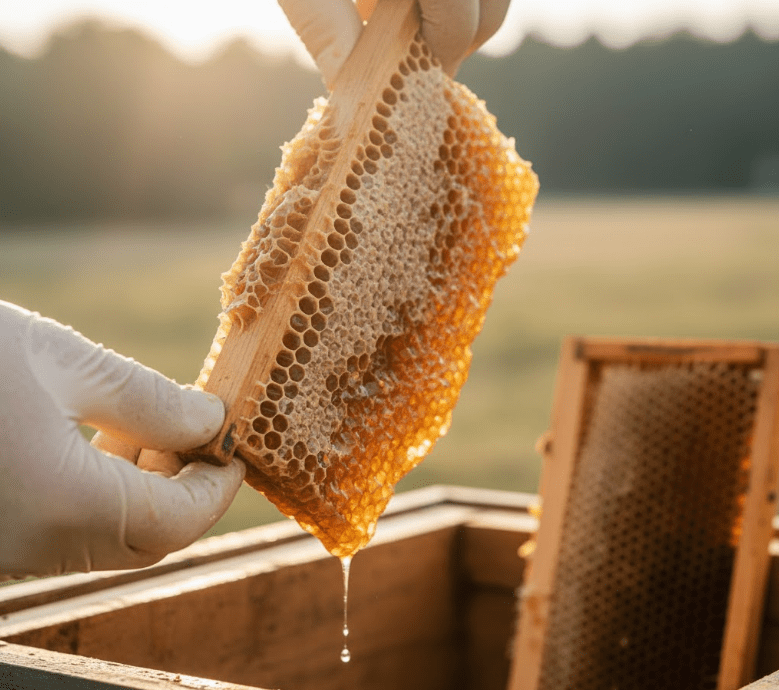
Direct Comparison: Langstroth vs Top Bar Hive (Cost, Maintenance, and Yield)
The choice between hive types ultimately comes down to a trade-off between convenience and yield (Langstroth) versus minimalism and naturalism (Top Bar). The table below offers a head-to-head comparison of the factors most critical to both beginner and professional beekeepers.
| Comparison Factor | Langstroth Hive | Top Bar Hive | Warre Hive |
|---|---|---|---|
| Initial Start-up Cost | High. Requires boxes, frames, and foundation. | Low. Simple construction; no frames needed. | Medium. Requires boxes and quilt box materials. |
| Honey Yield Potential | High. Vertical expansion maximizes storage. | Low. Limited by horizontal space. | Low to Medium. Vertical, but smaller overall. |
| Frame Standardization | High. Interchangeable worldwide. | Low. Non-standardized dimensions. | Low. Unique square box design. |
| Ease of Inspection | High. Easy to lift individual frames. | Medium. Bars are light, but comb is fragile. | Low. Requires manipulation of entire stack. |
| Lifting Required | High. Heavy supers (50–90 lbs) to lift. | Low. Only individual top bars are lifted. | Medium. Lifting stack for nadiring is heavy. |
| Harvesting Method | Centrifugal extraction (comb preserved). | Crush and strain (comb destroyed). | Crush and strain (comb destroyed). |
| Mite & Pest Control | Excellent access for chemical and IPM. | Challenging due to dimensions. | Minimal due to hands-off philosophy. |
Practical Application: Which Hive is Best for Your Climate and Goals?
The theoretical comparison of Langstroth vs Top Bar Hive is useful, but the practical reality of where and how you keep bees is often the deciding factor. The “best” hive is highly specific to the beekeeper’s personal circumstances.
The Urban Beekeeper and Space Constraints
- Langstroth: Excellent choice for urban environments. Their vertical design minimizes the footprint, allowing beekeepers to maximize colony density in small backyards or on rooftops. However, the heavy weight of supers can make management challenging on high rooftops without proper equipment.
- Top Bar: Its long, horizontal footprint requires significantly more ground area. While low-profile, the length can be prohibitive for very small urban plots.
- Warre: Its vertical stack and small square dimensions make it ideal for small spaces, and the excellent insulation is a bonus in city environments where temperature swings can be sharp.
The Commercial Beekeeper and Migratory Operations
The decision here is overwhelmingly clear. Commercial beekeeping relies on scalability, standardization, and mobility.
- Langstroth: This is the only viable option for commercial scale. The standardization allows thousands of interchangeable frames and boxes to be moved, loaded, and processed quickly. The use of extractors and the ability to add supers rapidly supports the high-volume honey production model required for profit.
- Top Bar & Warre: Neither is suitable for commercial work. The fragile, foundationless comb cannot withstand transport or centrifugal extraction, and the non-standardized nature of the components makes inventory management impossible.
Beekeeping in Extreme Climates (Hot and Cold)
- Cold Climates: The Warre Hive excels here due to its small cavity size and the essential quilt box, which manages moisture—the true killer of winter bees—and provides superior insulation. The Langstroth is manageable but requires additional insulation wrapping and moisture boards. Top Bar hives often struggle with winterizing due to their long, shallow shape.
- Hot Climates: Shallow, well-ventilated hives are preferred. A well-shaded Langstroth with a screened bottom board works perfectly. The Top Bar hive’s long shape also offers decent thermal mass, but can overheat if exposed to direct sun.
The Future of Hive Design: Hybridization and Sustainability
As beekeepers become more educated and aware of both commercial demands and natural beekeeping philosophies, hive design is evolving. Many contemporary beekeepers are seeking to combine the best features of the Langstroth and the Top Bar.
The Rise of Foundationless Frames in Langstroth Boxes
One of the most popular hybrid methods is running Langstroth boxes without pre-printed plastic or wax foundation. Instead, a simple wooden starter strip guides the bees to draw their own natural comb within the removable Langstroth frame. This offers the structural integrity and standardization of Langstroth while granting the benefits of natural comb prized by Top Bar beekeepers.
Comparing Honey Quality and Marketing
The hive type also affects your end product and how you market it:
- Langstroth Honey: Typically liquid, extracted honey. Marketed based on floral source (clover, buckwheat, etc.).
- Top Bar/Warre Honey: Often sold as Cut Comb Honey (if possible) or Crush & Strain Honey. This product commands a premium price due to the perceived “natural” status, often offsetting the low volume.
Final Decision Matrix: Which Hive Should You Choose?
To finalize your choice between the Langstroth vs Top Bar Hive (and the Warre), evaluate your priorities using this simple matrix:
- If your priority is MAXIMUM HONEY YIELD and SCALABILITY:
- Choice: Langstroth Hive.
- If your priority is LOW START-UP COST and MINIMAL FRAME MANIPULATION:
- Choice: Top Bar Hive.
- If your priority is EXTREME INSULATION, NATURAL COMB, and MINIMAL INTERVENTION:
- Choice: Warre Hive.
No matter which hive you choose, consistent Seasonal Hive Management and vigilant pest control are the true determinants of your success.

Frequently Asked Questions (FAQ) About Hive Types
The Langstroth hive is overwhelmingly recommended for beginners due to its standardized parts, easy frame inspection, and readily available instructional resources and tools.
Honey harvesting is significantly easier from a Langstroth hive because the frames can be spun in a centrifugal extractor, leaving the comb intact. Top Bar honey must be crushed and strained, which destroys the comb.
No. While standard in Top Bar hives, Langstroth frames can also be run foundationless (using only a starter strip). This provides a natural comb option within the traditional, manageable box structure.
Conclusion: The Best Hive Is the One You Commit To
The choice between the Langstroth vs Top Bar Hive is less about which one is universally “better” and more about which one aligns with your core philosophy and physical constraints. The Langstroth is the undisputed king of efficiency, standardization, and high yield, making it the practical choice for most beginners and any commercial venture. The Top Bar and Warre hives offer a profound connection to the natural process, demanding less intrusive management and yielding a premium, unique product, but at the cost of increased labor and lower volume.
Your decision hinges on your goals: are you focused on maximizing honey production, or are you prioritizing minimal disturbance and natural comb? By honestly assessing your priorities—cost, available time, physical strength, and your marketing goals—you can confidently choose the hive that will be the perfect, long-term home for your first colony and embark on your rewarding beekeeping journey. Remember, no matter the box, consistent monitoring and thoughtful Seasonal Hive Management remain the true secrets to colony success.
🐝 A Century of Beekeeping Wisdom
"Beekeeping is more than a hobby for me—it’s a family legacy. From my great-grandfather to my brother and me, we’ve managed our apiaries in the rugged landscapes of Herzegovina for four generations. Today, we care for over 300 hives, blending century-old traditions with modern techniques. Every tip I share comes directly from our hives to your screen."

