

The Essential Role of Drones in a Beehive: Biology, Purpose, and Seasonal Fate
In the complex social structure of a honeybee colony, the worker bees are the laborers and the queen is the mother. However, the male bees, known as drones, play a role that is often misunderstood by beginner beekeepers. Often viewed as “lazy” because they do not forage for nectar, clean the hive, or sting, the Role of Drones in a Beehive is actually the cornerstone of genetic diversity and the survival of the honeybee as a species.
This detailed guide explores the unique biology of drones, their spectacular mating rituals, and how beekeepers can manage drone populations for a healthier apiary.
Drone Biology: Built for a Single Mission
Drones are the only males in the hive, and their physical anatomy is strictly designed for one purpose: mating with a virgin queen in flight.
- Size and Shape: Drones are significantly larger and bulkier than worker bees, though shorter than a queen. They have a blunt, square-shaped abdomen.
- The Eyes: The most striking feature of a drone is his massive compound eyes, which meet at the top of his head. These “super-eyes” allow him to spot a flying queen from great distances.
- No Sting, No Tools: Drones do not have a stinger, nor do they have pollen baskets or wax glands. They are physically incapable of defending the hive or gathering food.
- Genetic Makeup: Drones are haploid, meaning they come from unfertilized eggs and only carry the genetics of their mother (the queen).
The Life Cycle of a Drone
The development of a drone is the longest of all three castes in the beehive, taking a total of 24 days from egg to emergence.
- Egg to Larva: The queen lays an unfertilized egg in a larger “drone cell.”
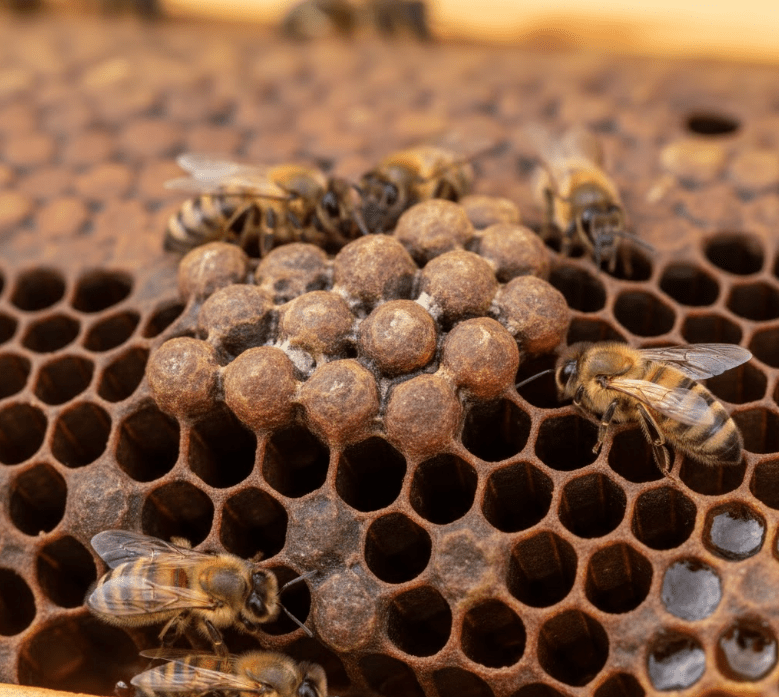
- Capping: On Day 9, the cell is capped. Drone cappings are easy to identify; they are significantly more convex (domed) than worker cappings, looking like “bullets” on the frame.
- Emergence: On Day 24, the drone emerges. He will spend his first few days being fed by worker bees until he is strong enough to feed himself from the honey stores.
The Mating Flight: Nature’s Ultimate Sacrifice
The primary Role of Drones in a Beehive happens outside the hive at Drone Congregation Areas (DCAs). These are specific aerial locations where thousands of drones from different colonies wait for a virgin queen.
- The Chase: When a queen enters the DCA, drones use their superior vision to pursue her.
- The Act: Only a few (10–20) drones will successfully mate with the queen.
- Instant Death: Mating is fatal for the drone. His endophallus is torn away during the process, and he dies almost instantly, falling to the ground.
Managing Hive Pests with Drone Foundation
Did you know that Varroa mites prefer drone brood? Beekeepers use Green Drone Foundation Frames to trap mites naturally. By removing the drone brood before they hatch, you can significantly reduce mite levels without chemicals.
Shop Varroa-Trapping Drone Frames »*As an Amazon Associate, we earn from qualifying purchases.*
The “Expulsion” – The Dark Fate of Winter Drones
Drones are a luxury for a beehive. They consume significant amounts of honey and provide no labor.
As winter approaches and nectar becomes scarce, the worker bees undergo a “drone purge.” They will physically drag the drones out of the hive and prevent them from re-entering. Without the warmth of the cluster or access to food, the drones perish. This ensures that the colony’s limited winter stores are reserved for the queen and the workers who will survive until spring.
Frequently Asked Questions (FAQ)
Q1: What is the primary Role of Drones in a Beehive?
Answer: The primary Role of Drones in a Beehive is to mate with a virgin queen from another colony. This ensures genetic diversity, which is vital for the health and survival of honeybees. Without the Role of Drones in a Beehive, the species would not be able to propagate.
Q2: Does the Role of Drones in a Beehive include any house chores?
Answer: No. Unlike workers, the Role of Drones in a Beehive does not involve cleaning, nursing, or foraging. Their only contribution inside the hive is helping to regulate temperature by vibrating their flight muscles during extreme heat or cold.
Q3: How does the Role of Drones in a Beehive change in the winter?
Answer: In winter, the Role of Drones in a Beehive effectively ends. Because they consume too many resources, worker bees expel them to ensure the colony’s survival. This seasonal shift shows that the Role of Drones in a Beehive is strictly tied to the active breeding season.
Q4: Can beekeepers benefit from the Role of Drones in a Beehive for mite control?
Answer: Yes! Smart beekeepers use the Role of Drones in a Beehive to manage Varroa mites. By using drone-specific frames, you can trap mites in the drone brood and remove them before they hatch, using the drones’ biology as a natural pest control tool.
Conclusion
The Role of Drones in a Beehive is a testament to the specialized nature of honeybee society. While their individual lives are often short and conclude with a dramatic end, their presence is a sign of a thriving, healthy colony with enough resources to invest in the future of the species. As a beekeeper, observing drone activity is a great way to gauge the seasonal cycle of your apiary.
🐝 A Century of Beekeeping Wisdom
"Beekeeping is more than a hobby for me—it’s a family legacy. From my great-grandfather to my brother and me, we’ve managed our apiaries in the rugged landscapes of Herzegovina for four generations. Today, we care for over 300 hives, blending century-old traditions with modern techniques. Every tip I share comes directly from our hives to your screen."

