

Beehive Robbing: The Silent Threat to Your Apiary – Prevention, Identification, and Intervention
In the natural world of honeybees, survival is paramount. When nectar flows diminish, a darker instinct can emerge: Beehive Robbing. This aggressive behavior occurs when bees from one colony (or even wasps) attack another, weaker colony to steal their stored honey and pollen. Often subtle at first, unchecked Beehive Robbing can quickly escalate into a violent frenzy, leading to the collapse of the robbed hive and, in severe cases, the spread of disease throughout the entire apiary.
This comprehensive guide will equip beekeepers with the knowledge to recognize the subtle signs of robbing, understand its underlying causes, implement effective preventative measures, and intervene decisively to protect their valuable colonies.

Ready to Start Beekeeping?
Get the Complete Beginner’s Essentials Kit – including a bee suit, smoker, and tools. Everything you need for your first hive!
View Starter Kit on Amazon →Understanding Beehive Robbing: What It Is and Why It Happens
Beehive Robbing is a predatory behavior where bees from strong, aggressive colonies attack weaker hives to steal their resources. It’s a desperate act driven by scarcity.
The Dynamics of a Robbing Attack
- Scout Bees: It begins with scout bees from a strong colony discovering a vulnerable hive.
- Recruitment: These scouts return to their hive and recruit fellow foragers, much like they would for a nectar source, but this time, it’s for plunder.
- Attack: The robbing bees attempt to overwhelm the guard bees of the targeted hive, breach their defenses, and access the honey stores.
Primary Causes of Robbing Behavior
- Nectar Dearth: This is the most common trigger. During late summer, fall, or periods of drought, natural nectar sources dwindle. Hungry bees then seek alternative food sources.
- Weak Colonies: Hives with small populations, a failing queen, or those recovering from disease (e.g., Varroa, Nosema, Chalkbrood) have fewer guard bees and are easily overpowered.
- Careless Beekeeping Practices:
- Spilling syrup or honey near the apiary.
- Leaving exposed honey supers or frames out in the open.
- Having large hive entrances on small colonies.
- Performing inspections during a nectar dearth.
Weak colonies are the primary targets for invaders, often because they are already struggling with Varroa Mite Control and cannot spare enough guard bees to defend the entrance
Identifying Beehive Robbing: Subtle Signs and Aggressive Escalation
Early detection is critical to preventing full-blown robbing. Be vigilant, especially during periods of low nectar.
Subtle Early Warning Signs
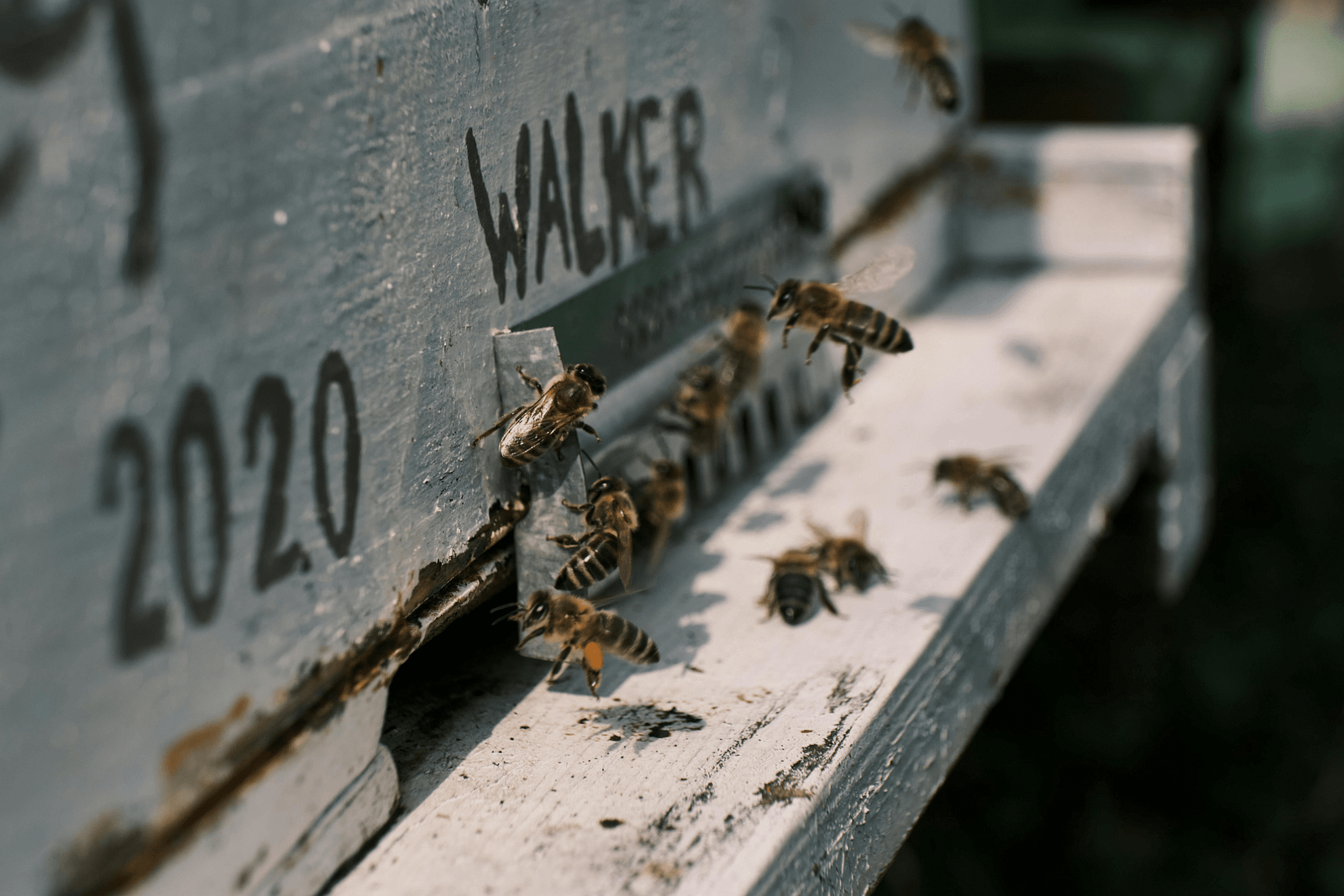
- Unusual Activity at the Entrance: Look for bees fighting at the entrance. Unlike occasional territorial skirmishes, robbing bees will be aggressively grappling, tumbling to the ground, and often trying to sting.
- “Greasy” or “Bald” Bees: Robber bees, desperate to gain entry, will often have a smooth, “greasy” appearance or even worn-off hairs on their thorax due to constant fighting.
- Chewing on Cappings: Robbing bees will often chew through existing honey cappings, leaving tell-tale wax debris on the bottom board or outside the hive.
- Absence of Pollen: Robber bees are primarily after honey, so you might notice a lack of pollen being brought into the robbed hive, even if other colonies are bringing it in.
Full-Blown Robbing Frenzy
If left unchecked, robbing escalates dramatically:
- Massive Aerial Activity: A huge number of bees will be flying erratically around the targeted hive, often forming a “whirlwind” or “tornado” pattern. This is different from normal foraging or orientation flights.
- Bees at Seams and Cracks: Robber bees will attempt to enter through any crack or crevice in the hive body, not just the main entrance.
- Loud Buzzing: The hive will have an unusually loud, angry buzz, even from a distance.
- Dead Bees on the Ground: Numerous dead and dying bees will be scattered around the entrance and base of the hive.

Ultimate Beehive Robbing Screen
The most effective way to stop an attack without suffocating your bees. This professional screen allows full ventilation while confusing robbers.
- Safe Ventilation: Prevents overheating during attacks.
- Easy Install: Fits standard 8 and 10-frame Langstroth hives.
- Proven Design: Redirects resident bees to a safe exit.
*As an Amazon Associate, we earn from qualifying purchases.

Preventing Beehive Robbing: Proactive Strategies
Prevention is always easier than intervention. Implement these practices consistently, especially during a nectar dearth.
Apiary Management Best Practices
- Minimize Openings: Reduce hive entrances to a single bee space, especially for smaller or weaker colonies. This gives guard bees an easier time defending.
- Seal Cracks: Ensure all hive bodies, supers, and covers are tightly sealed. Use propolis-friendly glues or tape if necessary to prevent robber access.
- Strategic Feeding: If you must feed syrup or pollen patties during a dearth, do so in the evening so bees have all night to consume it. Avoid open feeding, which can incite a frenzy.
- Cleanliness: Never spill syrup or honey around the apiary. Clean up any spills immediately and thoroughly.
- Timing Inspections: Perform hive inspections quickly and efficiently during a nectar flow, if possible. Avoid long, drawn-out inspections during a dearth. Close the hive as soon as possible.
- Equalize Hives: Maintain colonies of relatively equal strength. This reduces the number of weak targets and ensures no single hive becomes an overpowering aggressor.
Using Robbing Screens and Entrance Reducers
- Robbing Screens: These clever devices create a “zig-zag” entrance that confuses robber bees while allowing resident bees to enter and exit.
- Entrance Reducers: Simple wooden blocks that reduce the size of the hive entrance. Essential for new nucs and weak colonies.

Professional Robbing Screen
Stopping an Active Robbing Attack: Intervention Strategies
If you identify an active robbing attack, quick and decisive action is required to save the targeted hive.
Immediate Actions to Take
- Reduce Entrance: Drastically reduce the entrance to one or two bee spaces immediately. If it’s a small nucleus colony (nuc), close it completely for a few hours.
- Wet Sheet Method: Drape a wet bedsheet or burlap sack over the robbed hive. This disorients the robber bees, forcing them to find a new way to get out and return to their hive, effectively breaking their “scent trail.”
- Water Sprinkler/Spray: A gentle mist or sprinkle of water around the affected hive can disrupt the robbing activity by mimicking rain, which bees dislike flying in.
- Relocate the Robbed Hive: For severe, persistent attacks, move the entire robbed hive to a new location (at least 2-3 miles away) for a few days. Replace it with an empty hive body to catch any returning robbers.
Addressing the Root Cause
- Strengthen the Weak: Once the immediate threat is contained, assess the robbed colony. Is the queen failing? Is it diseased? Address these issues by requeening, treating disease, or combining with a stronger hive.
- Identify the Aggressor: If robbing is internal (from another hive in your apiary), try to identify the aggressive colony. You can do this by dusting robber bees with flour as they leave the robbed hive and tracking them back. Once identified, you might need to split the aggressive hive or requeen it with a gentler queen.
FAQs on Beehive Robbing
Yes. If your strong hive suddenly shows a massive increase in foraging activity during a dearth, or you see your bees fighting at the entrance of a neighboring weak hive, they might be the aggressors. You can use the flour method to confirm.
An active robbing scene makes bees extremely aggressive and defensive. It’s best to approach with caution, wear full protective gear, or observe from a distance. The likelihood of getting stung is significantly higher.
Sprinkle a small amount of flour onto bees leaving the robbed hive. Watch where these floured bees return. If they go back to another hive in your apiary, you’ve identified the aggressor. This helps you address the source of the problem.
A full-blown attack can last for hours or even days until the robbed hive is completely depleted of resources, or even until the colony is completely destroyed. This is why rapid intervention is crucial.
Conclusion: Safeguarding Your Apiary Against Robbing
Beehive Robbing is a stark reminder of the wild and sometimes brutal nature of the honeybee world. While a natural instinct driven by resource scarcity, it poses a significant threat to the health and survival of your colonies. By diligently implementing preventative measures—such as proper apiary management, strategic feeding, and the use of robbing screens—you can drastically reduce the risk.
When faced with an active attack, swift and calm intervention is paramount. Protecting your hives from robbing not only saves precious honey and bees but also prevents the spread of diseases and strengthens the overall resilience of your apiary. A watchful eye and proactive approach are your best defenses against this silent, destructive threat.
🐝 A Century of Beekeeping Wisdom
"Beekeeping is more than a hobby for me—it’s a family legacy. From my great-grandfather to my brother and me, we’ve managed our apiaries in the rugged landscapes of Herzegovina for four generations. Today, we care for over 300 hives, blending century-old traditions with modern techniques. Every tip I share comes directly from our hives to your screen."

